The Critical Role of People in Technology Adoption
Successful technology implementation hinges on addressing human dynamics. A Gartner study reveals that 70% of digital transformation initiatives fail due to people-related challenges, emphasizing the non-negotiable need for structured change management. When organizations prioritize employee readiness, training, and communication, adoption rates improve by up to 65%.
Proven Change Management Frameworks
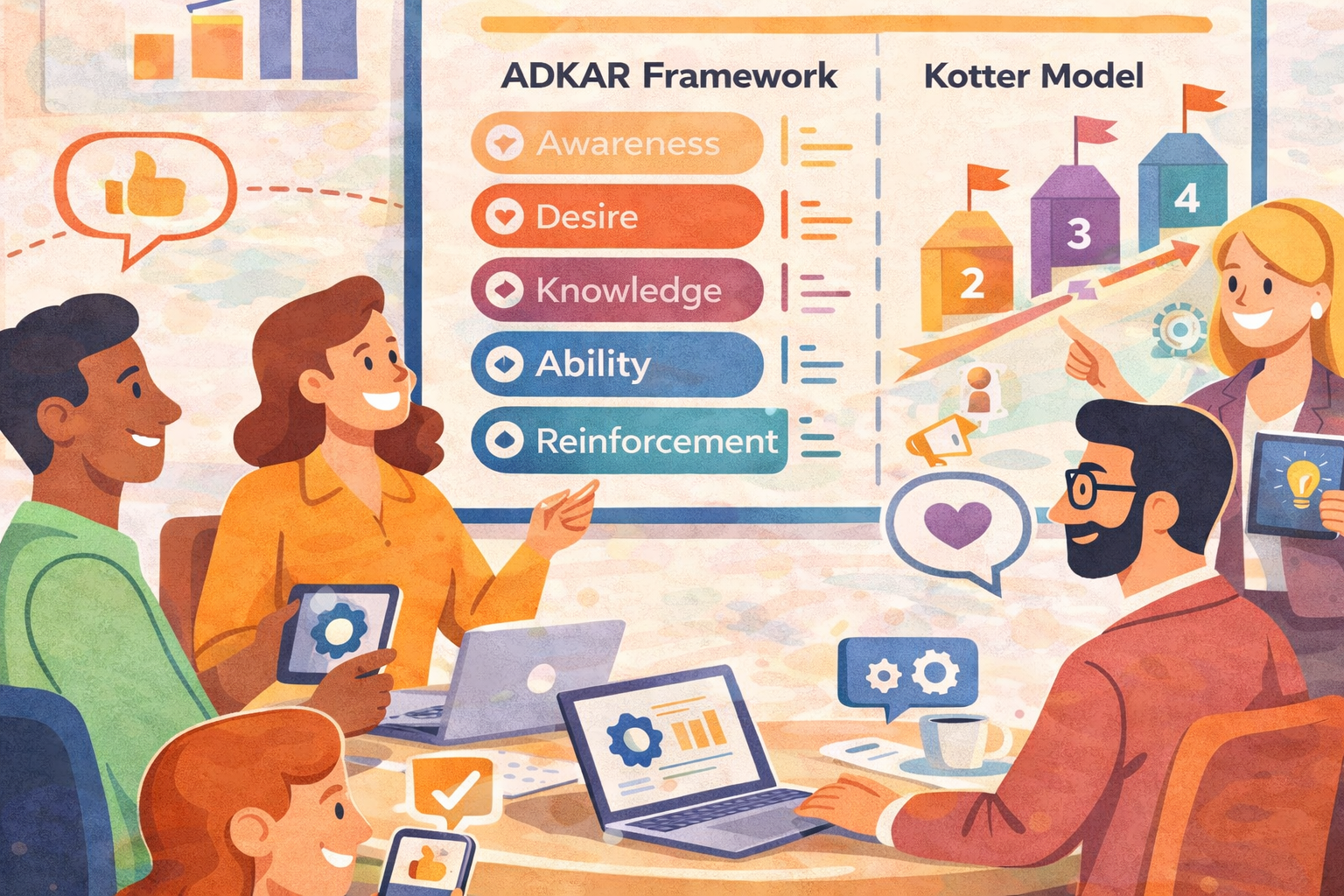
Established methodologies provide structured pathways for navigating technology transitions. Kotter's 8-Step Change Model emphasizes creating urgency and building coalitions to drive sustainable adoption. The ADKAR Framework, developed by Prosci, focuses on awareness, desire, knowledge, ability, and reinforcement. These models help organizations align leadership strategies with employee expectations, reducing resistance by up to 50% (McKinsey & Company, 2023).
Stakeholder Communication Strategies
Effective communication is the cornerstone of successful change management. A LinkedIn study shows that 82% of employees view transparent communication as critical during organizational changes. Techniques like "change champions" — influential individuals who advocate for transitions — can accelerate buy-in. Regular feedback loops and town hall meetings ensure stakeholders feel heard, mitigating uncertainty.
Tools for Streamlining Digital Adoption
Modern tools enhance the efficiency of change management efforts. Collaboration platforms like Microsoft Teams and Slack enable real-time communication, while platforms like Workday and Asana track progress toward digital goals. Additionally, change management software such as Clarizen and Change Control offers analytics to monitor employee engagement trends. For educational resources, explore the VeAssis blog.
Evaluating Readiness for Digital Transformation
Businesses must assess preparedness for technology initiatives using three key metrics: employee skill alignment, process flexibility, and leadership commitment. A Deloitte audit recommends conducting readiness assessments 6–12 months pre-implementation to identify gaps. Organizations using AI-driven diagnostic tools improved decision-making accuracy by 40% in cross-functional projects.
Industry Standards and Best Practices
Global standards like ISO 20000-1 and PMBOK guide organizations in managing change systematically. Best practices include phased rollouts, where small-scale pilots test workflows before full deployment. A Harvard Business Review analysis found that businesses adopting iterative approaches reduced costs by 28% while improving user satisfaction.
Measuring the ROI of People-Centric Change
Quantifying the impact of human-focused strategies is essential. Metrics like employee net promoter score (eNPS) and productivity benchmarks track the efficacy of change initiatives. A Forrester study reported that companies investing in change management software saw a 34% faster return on investment compared to those relying on ad hoc strategies.
Ready to learn more about how VeAssis can help your organization?