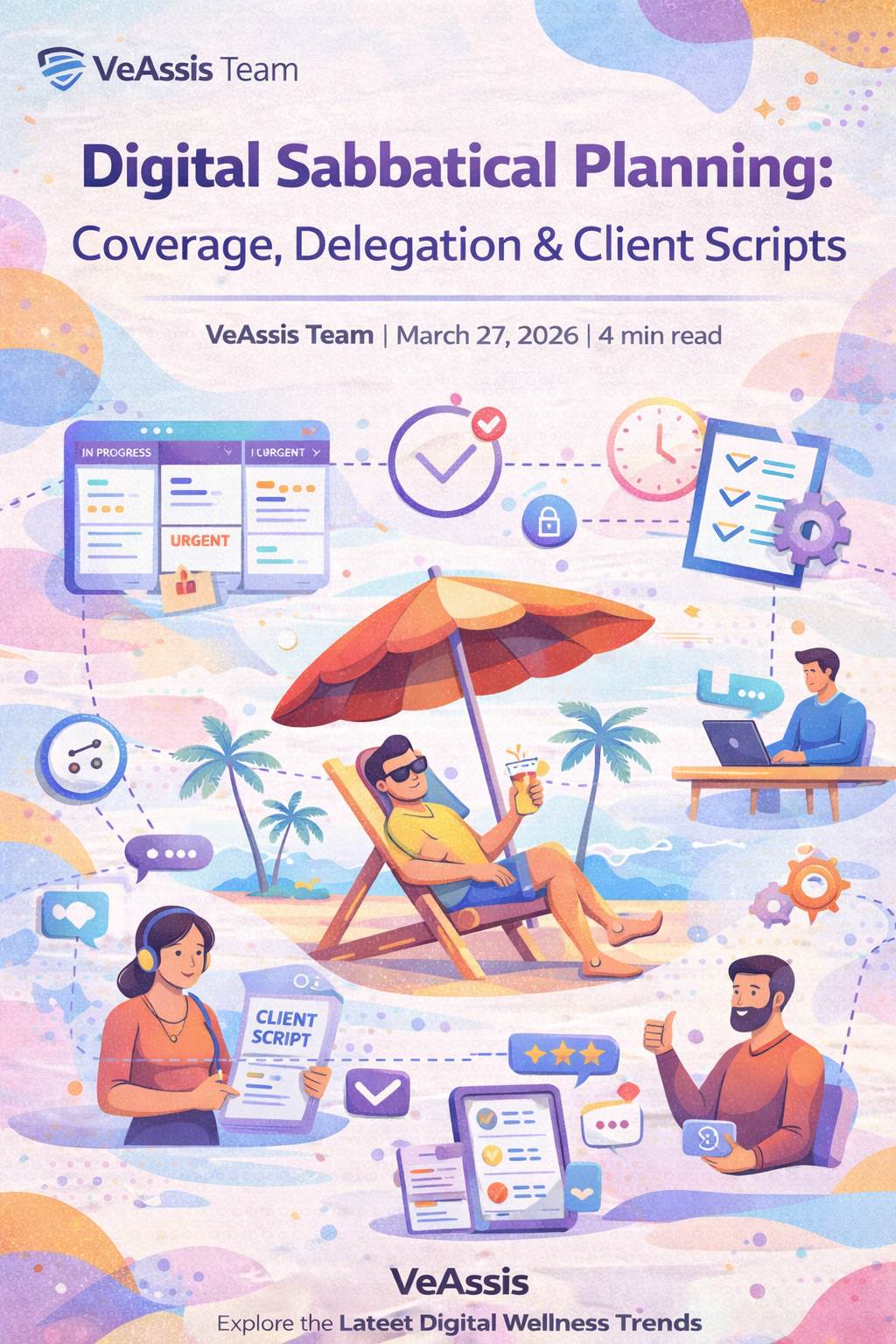
Introduction to Digital Sabbaticals
A digital sabbatical — a strategic pause from work — has become a vital tool for preventing burnout and fostering creativity in the tech and service industries. However, unplanned absences often lead to operational disruptions. This article outlines methodologies, tools, and best practices to ensure seamless team coverage, effective delegation, and transparent client communication during digital sabbaticals.
Step-by-Step Coverage Planning Methodologies
Effective coverage planning begins with a risk assessment of critical tasks. Task mapping tools like Trello or Asana help identify dependencies and set priorities. A 2023 McKinsey report highlights that 78% of successful remote teams use task delegation software to maintain continuity. Create a sabbatical timeline with three phases: preparation, handover, and transition. During preparation, document all active projects and assign backup responsibilities. The handover phase involves a dry run where substitutes review materials and ask clarifying questions. The transition phase includes scheduled check-ins to address unexpected issues.
Tools for Virtual Assistance in Coverage Plans
Virtual assistants (VAs) play a pivotal role in executing coverage plans. AI-powered tools like Zapier automate routine tasks, such as sending status updates to clients. A study by Gartner found that businesses using AI for task automation saw a 34% reduction in human error. Project management software like Notion allows teams to create shareable task delegation templates, including task assignments with deadlines, permission levels to ensure access to necessary tools, and emergency contacts for urgent queries.
Client Communication Scripts and Best Practices
Transparent communication with clients is critical. Develop scripts for email templates and social media updates. A pre-sabbatical email might read: "Dear [Client Name], I will be unavailable from [Date] to [Date]. My colleague, [Name], will handle your requests during this period. Expect a [X]-hour response window for urgent matters." Automated solutions like HubSpot or Mailchimp can schedule these messages. A 2024 LinkedIn survey found that 83% of clients prefer structured communication templates for unavailability.
Evaluating Coverage Plan Effectiveness
Industry standards, such as the ISO 24700 framework for delegation, provide benchmarks for sabbatical planning. Metrics to track include task completion rates, client satisfaction scores, and team feedback. After implementation, conduct a post-mortem to identify gaps. For example, a university IT department found that integrating weekly Slack updates from the substitute team reduced client complaints by 45%. Tools like Loom can record instructional videos for complex workflows, ensuring clarity for all stakeholders.
Conclusion: Sustaining Productivity Through Structured Planning
A well-structured digital sabbatical balances personal well-being and team performance. By leveraging task delegation software, refining client communication scripts, and aligning with industry standards, organizations can maintain operational continuity. For deeper insights on virtual team management, visit the VeAssis Blog.
Ready to learn more about how VeAssis can help your organization?